ABA therapy in Jacksonville and Salisbury, NC: Clinic vs. in-home options explained
ABA therapy Jacksonville NC can fit clinic or home routines. Compare peer practice, daily skills, travel, and family involvement before choosing care.

ABA therapy in Jacksonville and Salisbury, NC: Clinic vs. in-home options explained
Key Points:
- ABA therapy Jacksonville NC families can choose clinic-based or in-home care based on a child’s goals, learning needs, and schedule.
- Clinics support structured peer practice, while home sessions build skills within daily routines.
- A BCBA assessment helps select, combine, or adjust settings over time.
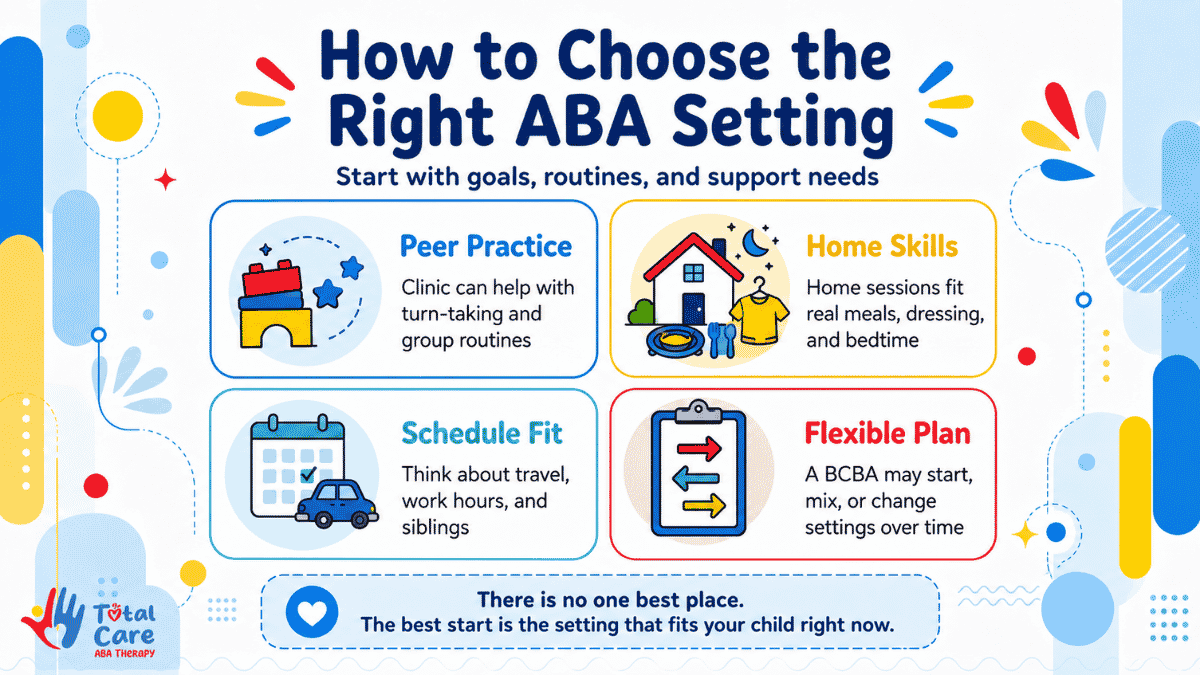
Families looking for ABA therapy in Jacksonville, NC or Salisbury can choose between clinic-based and in-home care. Neither setting is automatically better than the other. The stronger choice is the one that supports your child's current goals and matches your family's daily schedule.
Choosing a location comes down to understanding how your child learns best. In this article, we compare learning spaces, social opportunities, routine practice, caregiver participation, travel logistics, and key questions to ask before making a decision.
How ABA therapy in Jacksonville, NC and Salisbury works in two settings
At Total Care, our Jacksonville therapy center is located at 200 Doctors Dr, Suite J, while our Salisbury clinic is at 400 Mocksville Ave. Families looking for ABA therapy in Salisbury, NC or Jacksonville can also receive therapy directly in their own homes.
While the setting changes, the clinical foundation stays consistent. Every program starts with a thorough assessment led by a Board Certified Behavior Analyst (BCBA). The BCBA creates an individualized plan for your child and supervises daily sessions delivered by a behavior technician.
Both settings share these core components:
- Goals built around your child's individual strengths
- Direct one-on-one sessions with a trained technician
- Regular supervision and guidance from a BCBA
- Data tracking to review skill mastery
- Ongoing parent training and communication
- Plan updates when your child's needs change
In our work with North Carolina families, we see how much pressure eases once parents realize the location can adjust over time while core goals stay on track.
When clinic-based ABA may match your child’s goals
A clinic provides a planned learning environment designed specifically for skill development. Centers offer dedicated therapy materials, predictable schedules, and structured opportunities to practice skills around other children. These features can support children who need practice with group routines, waiting, taking turns, or following instructions around peers.
One program evaluation of 313 children showed higher rates of skill mastery during center-based sessions than home-based sessions. However, every child responds differently, so clinic care is not automatically necessary for every situation.
If you live in Jacksonville, consider how easily your family can travel to the Doctors Drive clinic. If you live in Salisbury, look at the drive to our Mocksville Avenue clinic. Commute times and work schedules play a major role in maintaining regular attendance.
Clinic sessions often focus on:
- Practicing social skills with peers
- Following group instructions
- Waiting and taking turns during play
- Learning around unfamiliar adults
- Transitioning between planned activities
- Building independence in a structured classroom setting
A parent searching for an autism clinic in Jacksonville, North Carolina may want structured peer practice for their child. From what we observe in our daily sessions, families who start at home often decide to add clinic time later once their child feels ready for group practice.

When in-home ABA may match daily routines better
How ABA therapy in Jacksonville, NC can use home routines
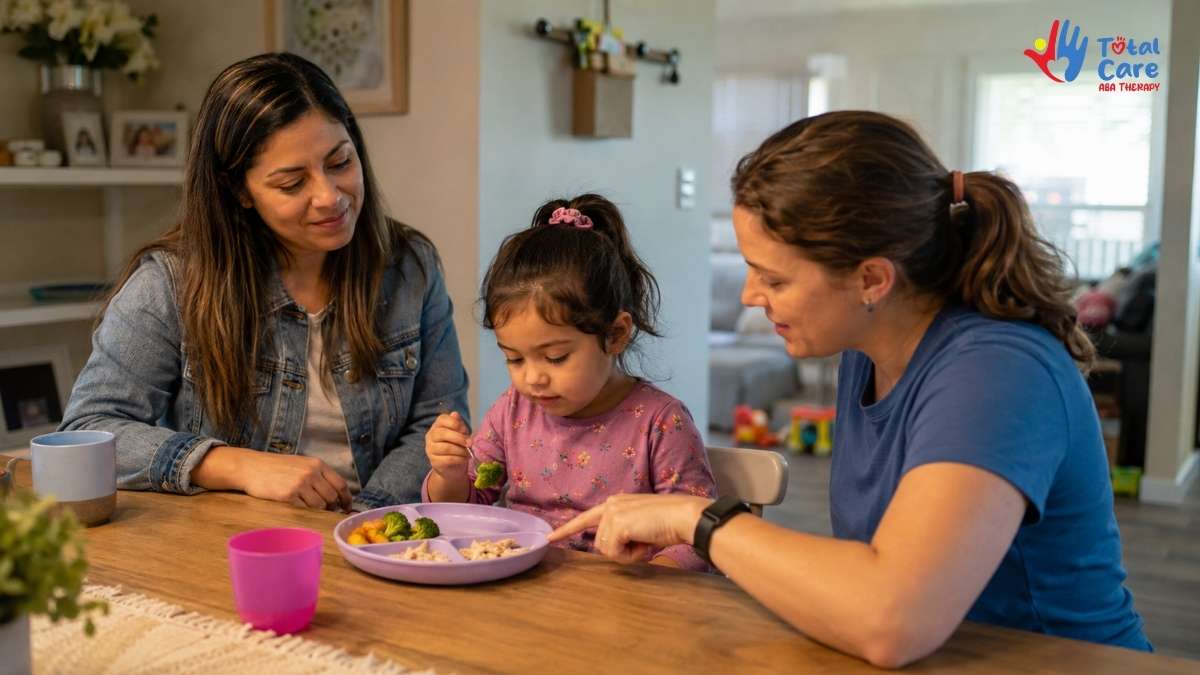
In-home ABA brings therapy into your child's everyday environment. Behavior technicians work directly within the rooms, routines, and spaces your child uses every day. This setting allows children with autism to practice self-care, communication, and family interactions right where those moments naturally occur.
In-home care removes regular clinic commutes, making sessions fit more easily into busy schedules. Families evaluating Salisbury autism services often choose home-based care when managing work hours, transportation options, or routines for multiple siblings.
Home-based sessions frequently focus on:
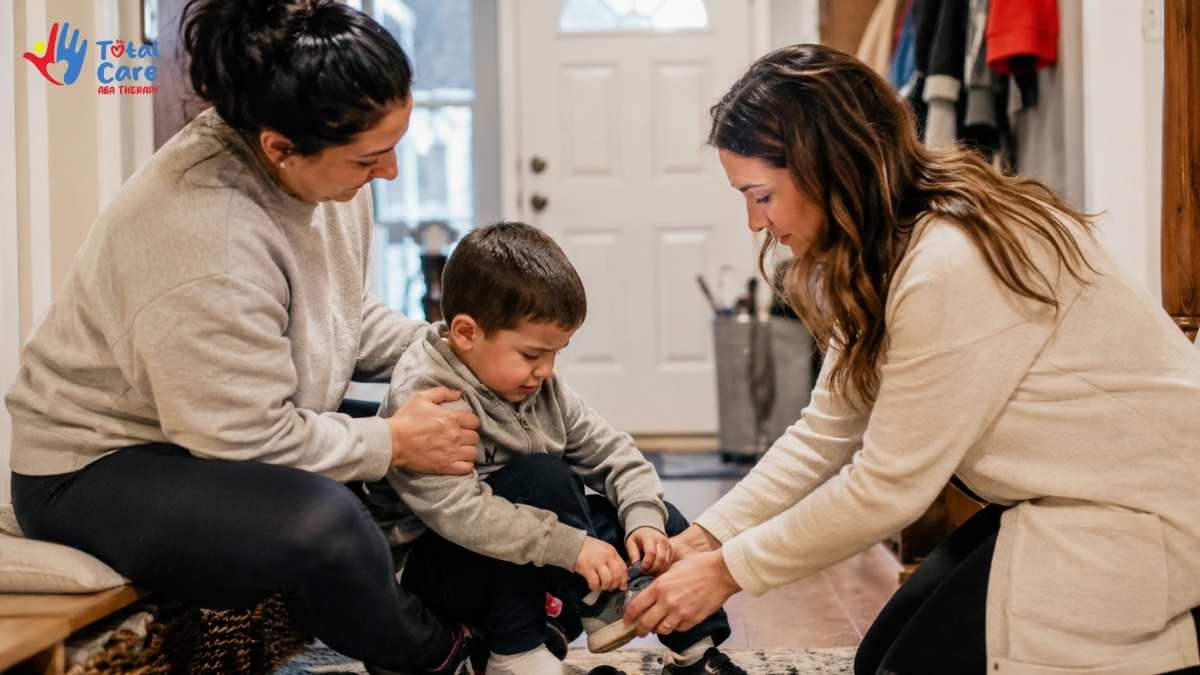
- Getting dressed independently
- Brushing teeth and morning hygiene
- Following mealtime routines
- Asking for food, toys, or help
- Transitioning smoothly to bedtime
- Playing and sharing with siblings
- Responding to everyday household directions
Our behavior technicians frequently see children master daily tasks like handwashing faster when practicing with their own household sink, soap, and towel.
Compare clinic and in-home ABA side by side
The table offers a starting point. An assessment should still identify which setting supports the child’s first goals.
Choosing between these options requires looking closely at your family's daily schedule in Jacksonville or Salisbury. Consider travel times to Doctors Drive or Mocksville Avenue alongside your child's targeted skills.
When our team builds initial care plans, home therapy often becomes the focus if mornings feel chaotic, while clinic care provides the structure needed for group play.
Ready to take the next step?
Are you deciding which environment suits your child's needs right now? At Total Care, we review your child's communication goals, learning needs, and family schedule before recommending clinic or in-home care in Jacksonville or Salisbury. Reach out to our team to begin an intake conversation and request a free insurance benefit check.
Choose the setting through an individual assessment
North Carolina Medicaid guidelines state that behavioral treatment must occur in the setting most appropriate for the child's specific goals. A child's plan can include clinic-based care, in-home therapy, school support, or a combination of settings. Clinical decisions must always build on an individualized assessment rather than a set template.
A quick search for a North Carolina ABA clinic near me gives you an address, but an assessment determines whether that clinic supports your child's immediate priorities. The BCBA evaluates your child's behavior, communication, and daily habits before suggesting a setting.
When choosing a starting point, consider these key questions:
- Which three daily skills need the most attention right now?
- Where do challenging behaviors occur most often?
- How does your child react to new or busy settings?
- Does your child need structured practice playing with peers?
- How easily can your family participate during home sessions?
- Can your family handle regular driving schedules?
- What setting does the BCBA recommend after completing the evaluation?
Parents often arrive at an evaluation convinced they need one setting, only to discover their child's immediate goals point toward another. Throughout the evaluations we conduct, we find that taking a fresh look at a child's daily routines often reveals an entirely unexpected starting point.

What families notice after starting each type of care
Parent reviews shared on our website highlight how each setting fits into daily life. One working parent noted that in-home sessions made scheduling therapy far easier around family obligations. Another parent shared that her son enjoyed going to the clinic, connecting with his therapist, and making new friends during peer play.
If you are exploring Jacksonville, NC autism support, watching how your child adapts during the first few weeks provides valuable information. Pay attention to how your child engages during therapy time and whether positive skills carry over into everyday moments.
Key signs to review with your BCBA include:
- Your child stays engaged during sessions
- New skills appear outside of therapy time
- Your family manages the schedule consistently
- Caregivers feel confident practicing strategies at home
- Your child has meaningful peer opportunities
- Daily routines at home become less stressful
Watching how your child responds during the first month gives our therapy team clear feedback on whether the chosen setting is supporting their growth.
FAQs about ABA therapy in Jacksonville and Salisbury, NC
Does insurance cover clinic and in-home ABA the same way in North Carolina?
Coverage depends on your health plan, clinical assessment, and authorized treatment plan. Parents should ask their provider to verify location coverage, authorization requirements, approved weekly hours, and setting restrictions before beginning sessions.
Do parents stay during clinic-based ABA sessions?
Parents usually do not sit through every clinic session. Instead, caregivers participate through scheduled training sessions, progress observations, and regular feedback meetings where therapists explain strategies to practice at home.
Can my child receive clinic and in-home ABA during the same treatment period?
A child can receive care in both settings if the clinical assessment supports a combined approach and insurance approves it. The BCBA designates specific goals for each environment so skills transfer smoothly across settings.
Choose the ABA Setting That Fits Your Child’s Goals
Clinic-based care supports structured learning and peer interaction, while in-home care builds skills directly within daily family routines. Neither setting is permanent, and choices can adapt as your child grows and gains independence.
At Total Care ABA, we provide clinic and in-home ABA services for children with autism ages 2 to 12 across Jacksonville and Salisbury, North Carolina. Our team guides you through every step, from initial questions to individualized treatment plans.
To explore options for your child, email info@totalcareaba.com or contact our team. Our intake coordinators will check your insurance benefits, answer your questions, and arrange a clinical assessment.