
How to prepare for in-home ABA therapy before the first visit
Families can prepare for in-home ABA therapy with everyday items. A short checklist covers space and visit plans.

How to prepare for in-home ABA therapy before the first visit
Key Points:
- Families can prepare for in-home ABA therapy by checking the visit’s purpose and the caregiver’s role in advance.
- Familiar communication tools should remain available, including tablets used for speaking.
- Household privacy and a way to report last-minute changes also belong in the plan before the therapist arrives.
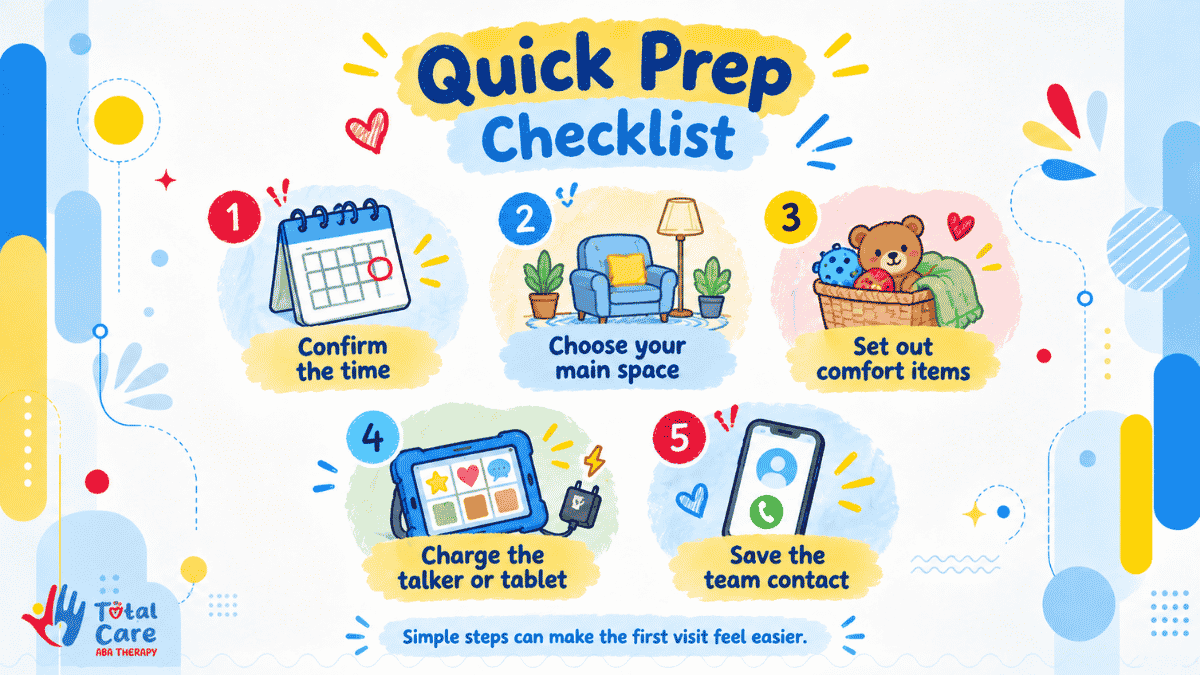
Your family can prepare for in-home ABA therapy by confirming the appointment, choosing a safe shared space, and keeping your child’s usual supports nearby. A separate therapy room or a shopping trip is unnecessary before you speak with the team.
At Total Care ABA, our home-based ABA therapy brings one-on-one support into your child’s everyday surroundings. The checklist below focuses on getting your household ready for that first visit.

1. Confirm what the first home visit involves
Your first appointment may involve an assessment or the start of treatment. The purpose affects who arrives, how long the visit lasts, and what you need to have available.
A short confirmation with the team should cover:
- The visit’s purpose, date, arrival time, and expected length.
- The visiting staff member’s name and role.
- Any records or forms still needed and how to send them securely.
- Parking, building access, and entry instructions.
- The contact person for appointment questions.
During our initial ABA assessment, a Board Certified Behavior Analyst, or BCBA, reviews your child’s skills and needs to develop a treatment plan. An ABA assessment does not diagnose autism.
Families still completing enrollment can follow the broader steps from referral to the first session. A scheduled home visit needs its own confirmation, even when intake paperwork is complete.
2. Choose a shared space and a backup option
An ordinary living room or dining area can provide space for a home visit. Preparing your home for ABA therapy means checking whether people can move safely and take part in the planned activities.
A practical space check includes:
- Enough floor or table space for the activity.
- Walkways without tripping hazards.
- Noise from televisions, appliances, or nearby work calls.
- Household hazards, including accessible medicines or cleaning products.
- A second area if the main space becomes busy.
For example, a dining table may work for a puzzle until a sibling needs it for lunch. A nearby floor area could provide another option. Your team can help decide what arrangement suits the visit.
A small home does not need a major rearrangement before the therapist arrives. Your description of the available space gives the team somewhere to begin.
3. Plan for pets, siblings, and privacy
Household members should know when the visit will happen and which areas the therapist may use. Pets and siblings also need a plan that protects everyone’s safety and comfort.
Before the appointment, consider:
- A secure, comfortable place for a pet that jumps, barks, or becomes upset around visitors.
- Who will supervise siblings while you speak with the therapist.
- Rooms that remain private or off-limits.
- Deliveries or visitors that may interrupt the appointment.
- A private place for conversations about your child’s records or concerns.
Sibling participation should follow a discussion about your child’s goals and everyone’s comfort. Brothers and sisters do not need to take on the role of a therapist.
Household cameras deserve a conversation before recording a visit. The team should explain applicable recording and consent requirements. The BACB’s standards for protecting confidential information cover spoken conversations, records, and recorded services.

4. Gather familiar items and communication supports
Familiar materials give the therapist a starting point for getting to know your child. A few items already used at home are enough to gather while you confirm whether the team needs anything else.
Your in-home ABA preparation checklist can include:
- Favorite books, toys, games, or activities.
- A comfort item your child normally uses.
- An existing visual schedule, picture board, or communication device.
- A device charger, if needed.
- Records specifically requested for this appointment.
Special furniture, activity kits, or new communication tools can wait until the team explains whether they are needed. Snacks only need to be available if their use is appropriate; allergies and dietary restrictions belong in that conversation.
Your child’s picture board or speaking device should stay available throughout the visit. A tablet used for speaking serves a communication need even when other screens are off.
5. Arrange caregiver availability and share everyday examples
Caregiver availability needs an agreement before the appointment. Your team should confirm which adult must be home, whether that person needs to remain in the room, and when participation is expected.
Work calls, school pickups, or care for another child can affect those plans. An early conversation gives everyone time to address competing responsibilities.
A short note about your child can cover:
- How your child asks for help, a break, or something they want.
- Sounds, lighting, touch, or other experiences they find uncomfortable.
- Signs that your child feels tired, upset, or unwell.
- A daily task your family wants support with.
Specific examples can say more than a broad concern. “The vacuum hurts her ears” gives more detail than “She dislikes noise.” “He brings me his cup when he wants water” describes communication the therapist may otherwise miss.
Through our ABA parent training, we demonstrate strategies and help caregivers practice skills connected with their child’s goals. A note about a difficult morning routine can give that later conversation a practical starting point.
6. Save a contact for last-minute changes
The team’s preferred contact method belongs with your appointment details. A saved phone number or message thread can prevent a search through old emails on the day of the visit.
An update is needed when the address changes, a different caregiver will be home, or an unexpected event affects access or safety. Illness or new discomfort also deserves a message before the therapist arrives so the team can explain what happens to the appointment.
Medical concerns belong with your child’s healthcare professional. The ABA team handles the visit arrangements.
FAQs about preparing for in-home ABA therapy
What should I tell my child before the therapist arrives?
A short, honest explanation can describe who is coming and why. For example, “Someone is coming to spend time with us and learn about what you do at home.” Familiar words or pictures may help. Promises about specific games or activities should wait until the team confirms them.
Can I request an interpreter before the first visit?
An interpreter request belongs in the conversation before the appointment. Your provider needs to know your preferred language and whether you need translated forms or spoken interpretation. The team should explain the available arrangements before you agree to services or sign documents you do not understand.
Can the first visit take place at a grandparent’s home?
A different address needs the provider’s approval before the visit. The team can check whether services can take place at the requested home and explain any scheduling or coverage requirements. An appointment booked for one address should not automatically move to another.
Prepare for your child’s first home visit
A first home visit gives your family and the therapist a starting point for working together. Your child’s familiar surroundings and your everyday examples can help the team understand what support your household needs.
Our team can answer questions about home-based care and the steps before services begin. Families exploring care can contact us about their child’s needs and service options. Caregivers with an appointment already booked can use their assigned team’s contact details to confirm what to have ready for an ABA home visit.