Extinction burst examples in ABA and what parents can do
Extinction burst examples show what may happen when reinforcement ends. Learn what parents can do when behavior changes.

Extinction burst examples in ABA and what parents can do
Key Points:
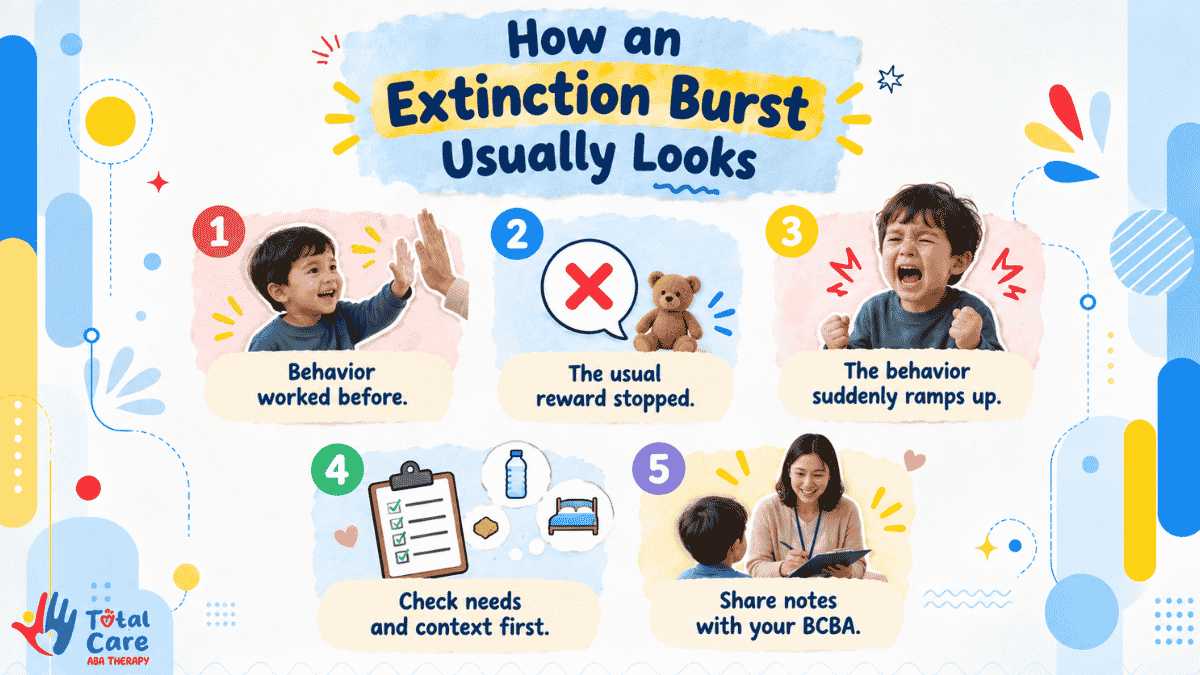
- Extinction burst examples connect three events: a behavior previously produced a result, that result stopped, and the behavior increased.
- A single incident cannot establish why the increase happened.
- Caregiver observations and clinical assessment help distinguish this pattern from discomfort or unmet needs.
A child who usually gets a parent’s attention by calling their name may start calling more often when the parent stops responding. That increase could be an extinction burst: a temporary increase in a behavior after it stops producing its usual result.
Extinction burst examples help explain this pattern. They cannot tell you why your child became upset or whether a treatment is helping. Research shows that bursts happen in some situations, so increased behavior needs careful assessment.
Two extinction burst examples
The following examples describe possible behavior patterns. They are not instructions to ignore a child or withhold comfort.
A child tapping for a favorite toy
Imagine a child who taps the kitchen table when they want a toy. An adult usually brings the toy after the tapping.
One day, the tapping no longer brings the toy. The child begins tapping faster and more often. A BCBA would need to examine three details before interpreting that increase:
- The tapping previously led to access to the toy.
- That result stopped following the tapping.
- The tapping increased soon after the change.
The tapping may also be the child’s way of asking. A caregiver can acknowledge the request and help the child express what they want. Nothing in this example establishes that the tapping needs to be reduced.
A snack machine that stops responding
A person presses a machine’s button and usually receives a snack. When the machine stops delivering snacks, the person presses the button several more times in quick succession.
The repeated pressing illustrates how a familiar action may increase when its expected result disappears. The behavior was pressing the button. Its usual result was receiving the snack.
Why a behavior may increase when reinforcement changes
In applied behavior analysis, or ABA, reinforcement means a result that makes a behavior more likely to happen again. A child may wave more often because waving brings a parent’s attention. The attention reinforces the waving.
Extinction happens when a behavior stops producing the reinforcement that previously kept it going. Punishment is a separate concept: it involves a consequence that reduces future behavior.
Sometimes, a behavior increases before decreasing. That increase may be an extinction burst, but it does not happen every time reinforcement ends. A review of extinction-burst research describes differences across studies. Increased behavior alone does not prove that a technique is working.
Our ABA therapy glossary explains reinforcement and other terms you may hear during treatment.
Does every increase in behavior mean an extinction burst?
An increase in crying, shouting, or repeated actions can have several explanations. A child may have difficulty expressing a need, feel uncomfortable, or struggle with a change in routine.
Assessment should consider possible causes of distress, including pain, communication difficulties, and noise levels. A behavior label should not replace checking what the child needs.
When a child may be communicating discomfort
Imagine a child covering their ears and crying during a noisy family gathering. The noise continues, and the crying becomes louder.
The child may need a quieter space or help leaving the activity. Calling the crying an extinction burst could overlook that discomfort. A caregiver can respond to the child’s need without first deciding which behavior term applies.
At Total Care ABA, our initial assessments include observation, skill assessments, and conversations with caregivers about routines and concerns. Our Board Certified Behavior Analysts, or BCBAs, use that information to develop individual treatment goals.
Four steps when your child’s behavior becomes more concerning
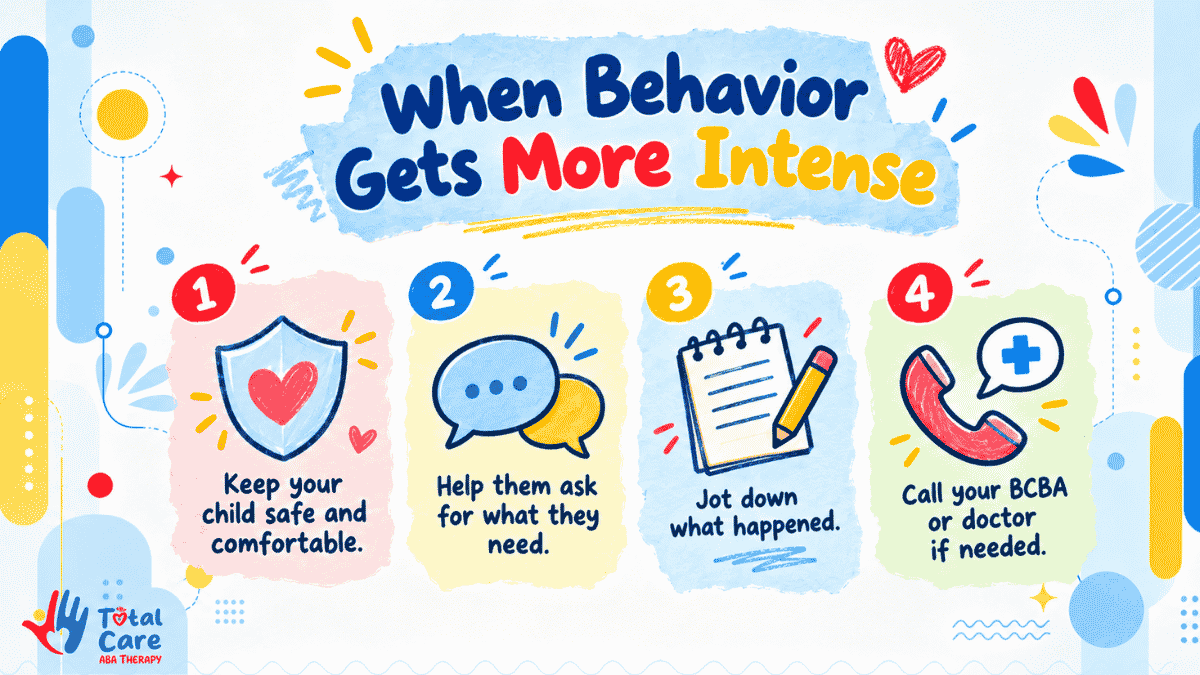
Your child’s immediate needs come first. Parents do not need to identify an extinction burst before offering help.
- Safety and comfort. Your child may need rest, food, comfort, medical attention, or a break. Immediate danger calls for emergency assistance.
- Communication support. Your child can express needs through their usual method, including speech, gestures, pictures, or a communication device.
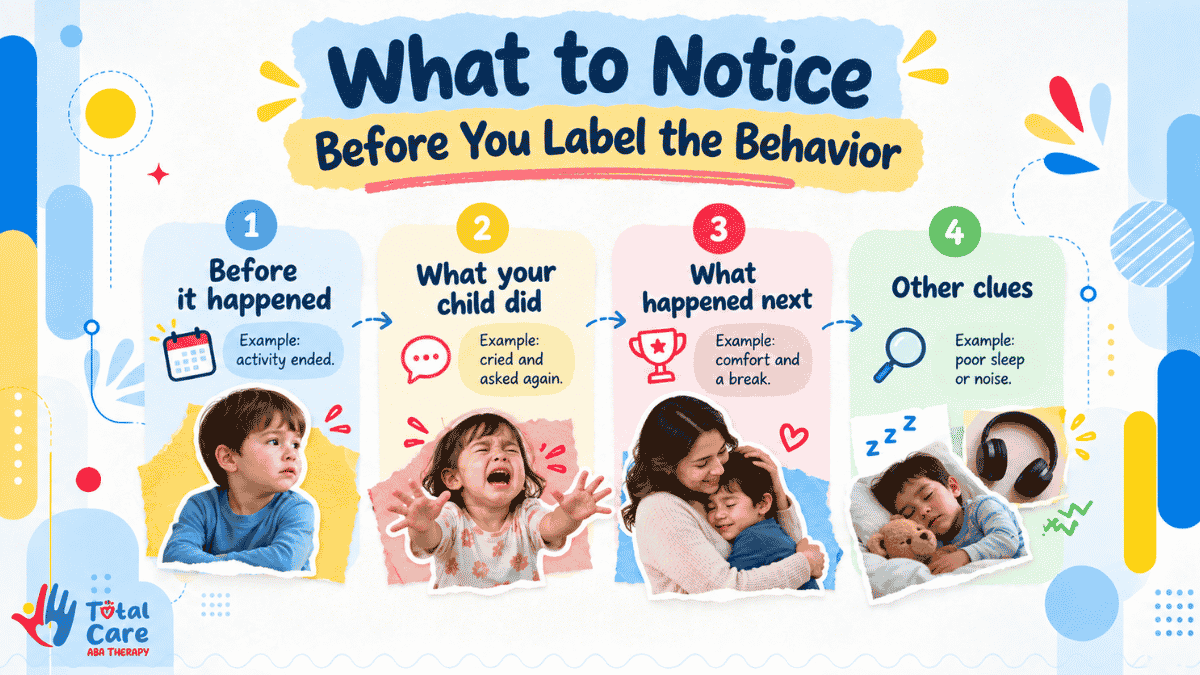
- Observations. Brief notes can describe what happened before the behavior, what your child did, and what followed.
- Clinical contact. Your child’s BCBA can review changes and reconsider the plan. New pain or signs of illness also need attention from a healthcare professional.
Research has documented increased responding and aggression during some extinction procedures. Those findings came from people receiving treatment for self-injury and do not predict what every child will experience. Dangerous behavior should never receive a blanket instruction to wait for a burst to end.
What information should parents share with a BCBA?
Notes work best when they describe what someone could see or hear. “Cried and asked for the activity again” gives more information than “acted badly.”
The table below shows a hypothetical record. It does not establish an extinction burst.
During ABA parent training, we help caregivers share observations, practice strategies, and review progress. Our BCBAs also work through situations families face at home, so coaching connects to daily routines.
How a BCBA can help assess behavior changes
A functional behavior assessment, or FBA, examines what may be influencing a behavior. The BCBA reviews patterns, including what happens before and afterward, to identify the result the behavior may produce.
Treatment decisions depend on the child’s needs and the assessment findings. Extinction is not required for every behavior concern.
Teaching another way to communicate a need
Functional communication training, or FCT, teaches a communication response that serves the same purpose as a concerning behavior. For example, a child who has difficulty requesting a break may learn to point to a break card, make a gesture, or say, “I need a break.” The clinician selects a method the child can manage and others can recognize.
Our home-based ABA therapy provides individual sessions within familiar routines. Therapists work under BCBA supervision on goals based on each child’s assessment and family priorities.
Families can also read about practicing help and break requests as part of everyday safety skills.
FAQs about extinction burst examples
How long does an extinction burst last?
No single timeline applies to every person or situation. Research uses different ways to measure bursts, so claims that they always end within a week are unreliable. A clinician needs to assess a continuing increase instead of assuming it will resolve by a certain day.
Are extinction bursts a sign of autism?
An extinction burst alone does not indicate autism. The term describes a learning pattern, and research has examined it across different populations and settings. An autism diagnosis requires a separate developmental evaluation.
Does an extinction burst mean a parent did something wrong?
The label alone cannot establish that a parent made a poor decision. A clinician needs to examine the events and the child’s needs. Caregiver observations should help explain the situation without blaming the parent or treating the child as deliberately difficult.
Plan support for your child’s daily routines
Behavior changes deserve attention to what your child is experiencing and trying to communicate. Examples can explain a concept, while an individual assessment helps identify goals and support for everyday life.
At Total Care ABA, we provide BCBA-led assessments, parent training, and individualized ABA services. You can contact our team to learn about available services and what getting started involves.