
ABA therapy in Texas: A step-by-step guide for families just getting started
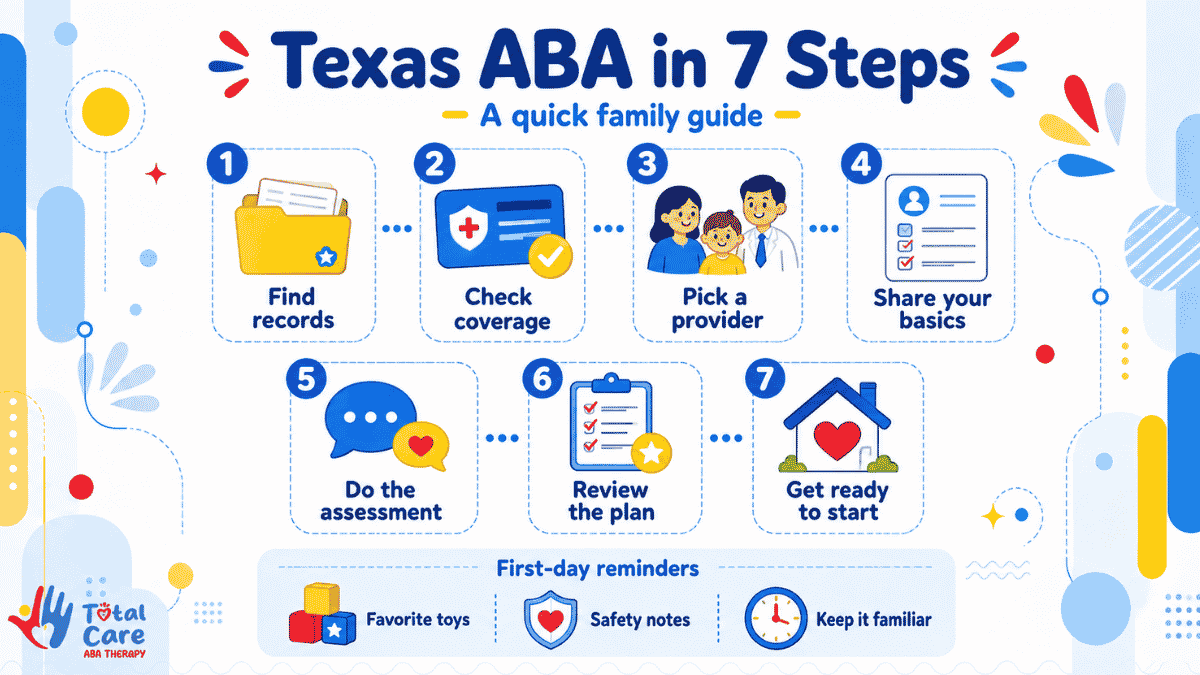
ABA therapy Texas intake starts with diagnosis records, benefit checks, and a BCBA assessment. The seven steps show what leads to the first session.

ABA therapy in Texas: A step-by-step guide for families just getting started
Key Points:
- ABA therapy Texas intake typically begins with diagnosis records, insurance verification, provider selection, and a BCBA assessment.
- An individualized treatment plan then sets goals, hours, settings, and caregiver participation.
- Families prepare for the first session by sharing routines, safety needs, schedules, and preferred activities.
ABA therapy in Texas usually starts with confirming your child’s diagnostic records and insurance benefits. Next, you choose a provider, complete intake, participate in a Board Certified Behavior Analyst assessment, review the treatment plan, and prepare for the first session.
This guide explains every step in sequence so you know what to expect along the way. State guidelines, Texas Medicaid policies, and commercial insurance plans often request different documents throughout intake. Understanding these requirements early keeps the enrollment process moving smoothly for your household.
Step 1: Confirm which diagnosis records your insurance plan requires
Developmental concerns are common, but insurance companies require formal medical documentation before approving care. You need to gather the full diagnostic report, diagnosis date, physician contact info, and an active referral. An autism evaluation in Texas may involve a developmental pediatrician, psychologist, neurologist, or another qualified professional accepted by your health plan.
How Texas Medicaid reviews autism diagnosis records
Texas Medicaid requires diagnostic documentation completed within the past three years. A signed referral and prior authorization must also be submitted.
Standard diagnostic documents include:
- Full autism diagnostic report
- Diagnosis date
- Referring professional's signed order
- Developmental or psychological testing
- Current insurance information
- School evaluation, when available
Intake questions sent to our team show that many calls begin with a school evaluation rather than a medical report. That gap frequently delays approval when insurance rules require medical documents.
Step 2: Check insurance benefits before choosing a schedule
An active insurance card confirms coverage, but it does not automatically guarantee ABA authorization. Coverage rules for autism therapy in Texas can differ between Medicaid managed care plans, employer policies, and individual plans.
Texas Medicaid covers eligible children and young adults age 20 or younger with prior authorization. Commercial health insurance plans set their own criteria for session settings and hourly limits.
Key insurance questions to ask include:
- Is the provider in network?
- Is a referral required?
- Does ABA require prior authorization?
- Are assessments covered?
- Are home, school, and community sessions covered?
- Is caregiver training included?
- Are there visit or hour limits?
- What amount may the family owe?
During an insurance benefit check, our intake team notices that initial questions focus heavily on approval. Details about copays and network status actually give a far clearer picture of long-term costs.
Ask for a benefit check
At Total Care ABA, our intake team can review your insurance benefits and explain the documents your plan may request. A benefit check can identify network status, prior authorization rules, possible family costs, and covered settings before the assessment process begins. Request a benefit check now to get started.

Step 3: Compare ABA therapy in Texas providers by service fit
Local options for ABA therapy in Houston spread from there to Dallas-Fort Worth, Austin, San Antonio, El Paso, and the Rio Grande Valley. Evaluating ABA providers in Texas means looking beyond simple drive times to inspect clinical support and scheduling flexibility.
Searching for ABA therapy near you in Texas helps you identify nearby coverage, while learning about Texas autism services allows you to choose a team aligned with your goals.
When reviewing recommended therapy hours, you can ask how each hour connects directly to specific goals, daily rest, and school routines. Asking questions helps you find a balance that suits your child without feeling forced into a rigid schedule.
Questions to ask potential providers:
- Who will supervise the treatment plan?
- How often will the supervising BCBA observe sessions?
- How are therapist changes handled?
- How are weekly hours chosen?
- What role will caregivers have?
- How are cancellations or missed sessions handled?
- Can the team coordinate with school, speech, or occupational therapy providers?
- Which home, school, and community settings are available?
Looking at families we support, location is rarely the sole factor in success. Clear communication and steady supervisor presence usually shape your daily experience much more than driving distance.
Step 4: Prepare your records before the intake call
Calling a provider starts an intake discussion about your child's needs, schedule, and insurance details. When describing your goals, everyday language works best. Explaining that your child struggles with leaving the house safely or handling morning dressing routines gives clinicians immediate context.
Essential intake items to collect:
- Insurance card
- Child's identification details
- Autism diagnostic report
- Referral or prescription, when required
- Medication list
- Developmental history
- Individualized Education Program or 504 Plan
- Speech and occupational therapy reports
- Current school schedule
- Caregiver availability
- Two or three priority concerns

Step 5: Participate in the BCBA-led assessment
An initial assessment evaluates communication abilities, social interactions, self-care routines, and behaviors linked to safety. During this time, the BCBA reviews records, observes your child, interviews caregivers, and conducts structured skill assessments.
What an ABA therapy in Texas assessment should produce
Clinical observations help clinicians create individualized goals for daily routines and social growth. Research suggests structured behavioral interventions support skill development across key areas.
Common assessment goals cover:
- Asking for help or a break
- Following a morning routine
- Using a communication system
- Staying near a caregiver in public
- Completing age-appropriate self-care
- Tolerating planned changes
- Joining short peer activities
During initial meetings, our clinicians notice that parents often feel pressured by long target lists. We focus first on core safety and communication priorities before building toward broader milestones.
Step 6: Review the treatment plan before services begin
The treatment plan should connect each goal to information gathered during the assessment. The weekly schedule for home-based ABA services should account for your child's needs, school, other therapies, family routines, and ability to participate.
These points deserve review:
- Target skills and weekly hours
- Session setting and caregiver participation
- Progress measurement and BCBA supervision
- Review dates and professional coordination
- Authorization period and proposed start date
You can ask why a certain number of hours was recommended. The answer should connect those hours to assessed needs and goals instead of using one schedule for every child. Texas Medicaid plans must include measurable caregiver goals and planned training when those services form part of care.

Step 7: Prepare for the first in-home ABA session
In-home ABA therapy in Texas lets the therapist observe daily skills and routines. The first visit often focuses on introductions, preferred activities, and simple goals. Your home does not need to look like a classroom for in-home ABA therapy sessions.
Before the session:
- Keep preferred toys or activities available
- Share snack, allergy, and medication information
- Explain household routines
- Identify rooms the therapist may use
- Discuss pets, siblings, and safety concerns
- Tell the team about naps or meal schedules
- Keep the first day as close to a normal day as possible
In our clinical experience, children often walk away or stick to favorite toys during initial visits. Our team expects this adjustment period and lets trust build naturally.
What families often find helpful during the first few weeks
The first few weeks help everyone learn the schedule, updates, and caregiver role. Children may also need time to become comfortable with a new therapist and session routine.
Reviews from families we serve often mention communication during changes, convenient home sessions, therapist relationships, and progress noticed over time. These comments support steady communication and realistic expectations without promising a set timeline or result.

FAQs about ABA therapy in Texas
Can my child receive ABA, speech, and occupational therapy at the same time?
Yes. Many children receive ABA therapy and school support services simultaneously when each targets distinct goals. Sharing schedules with your BCBA allows therapy teams to coordinate goals, prevent exhaustion, and align support strategies across all services with proper consent.
Can we request another therapist if the match is not working?
Yes. You can share concerns about communication, scheduling, or personal fit with your supervising BCBA. Your provider should evaluate the situation, offer additional clinical coaching, or assign a replacement therapist when a different match best supports your child.
Will moving to another Texas city affect ABA services?
Yes. Moving to Austin or another Texas city can affect services because insurance networks, regional staffing, and authorizations depend on location. Notifying your provider and insurer before moving helps verify local coverage and determine whether new authorization documents or local teams are necessary.
Begin your Texas ABA intake
Preparing diagnostic records, confirming insurance coverage, and asking targeted provider questions helps establish a smooth start. Organizing these key details early prevents unexpected delays between your initial inquiry and the clinical evaluation.
At Total Care ABA, we provide in-home ABA therapy, school support, and community-based services for children ages 2 to 12 across major Texas cities and surrounding communities. Reach out to us or email info@totalcareaba.com. Our intake team will review your information, check your benefits, explain missing records, and help schedule the assessment.