7 Real safety skills ABA therapy teaches, and how to practice them before Halloween
ABA therapy safety skills cover stopping, staying close, street crossing, asking for help, and break requests. See simple ways to practice before Halloween.

7 Real safety skills ABA therapy teaches, and how to practice them before Halloween
Key Points:
- ABA therapy safety skills teach children clear responses for stopping, staying close, crossing streets, seeking help, and requesting breaks.
- Practice starts in calm settings before adding real-world distractions such as costumes, crowds, and traffic.
- Repeated rehearsal across settings helps children use safety responses more reliably.
Applied Behavior Analysis (ABA) can teach concrete safety responses that a child practices repeatedly until those actions become second nature outside therapy. Teaching safety skills to children with autism early on helps build responses like stopping on cue, staying near a caregiver, crossing streets, and asking for help. Trick-or-treating gives families a planned setting to rehearse these actions around crowds, streets, and unfamiliar adults.
Our team uses ABA parent training to break each target into simple steps you can practice at home. These seven safety skills prepare your child for October 31 and everyday outings.
1. ABA therapy safety skills can build a clear response to “stop”
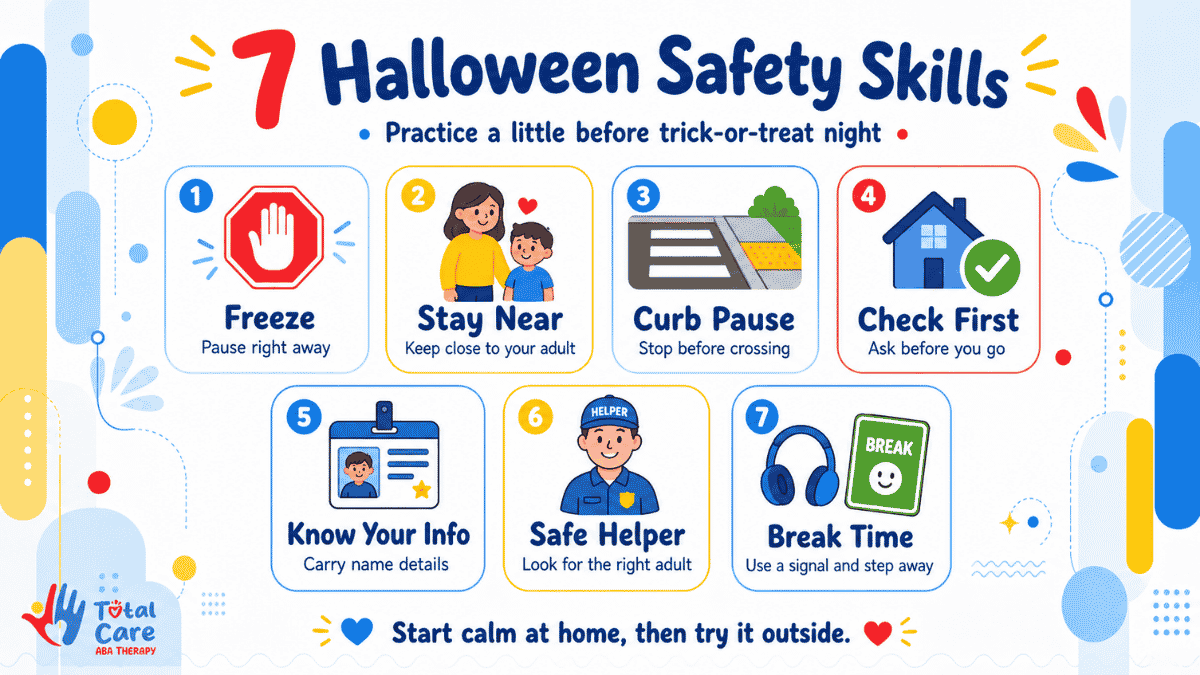
Understanding what "stop" means differs from halting physical movement. When setting this goal, our Board Certified Behavior Analysts (BCBAs) define the target in visible steps, such as pausing, turning toward you, or waiting. We teach this action using short cues, modeling, practice, and positive feedback.
A quick stopping response protects children near driveways, parking lots, and busy sidewalks. Rehearsing this action in quiet spaces first helps your child build the response before facing holiday crowds.
Halloween practice:
- Practice "stop" indoors during a simple walking game.
- Move to the driveway after the indoor response becomes familiar.
- Increase distance gradually across separate attempts.
- Give immediate feedback after every successful pause.
2. Staying close to a caregiver helps reduce separation risk
Proximity safety focuses on staying close to a caregiver before a problem happens. Target responses can include walking alongside you, holding a hand, or stopping at agreed boundaries.
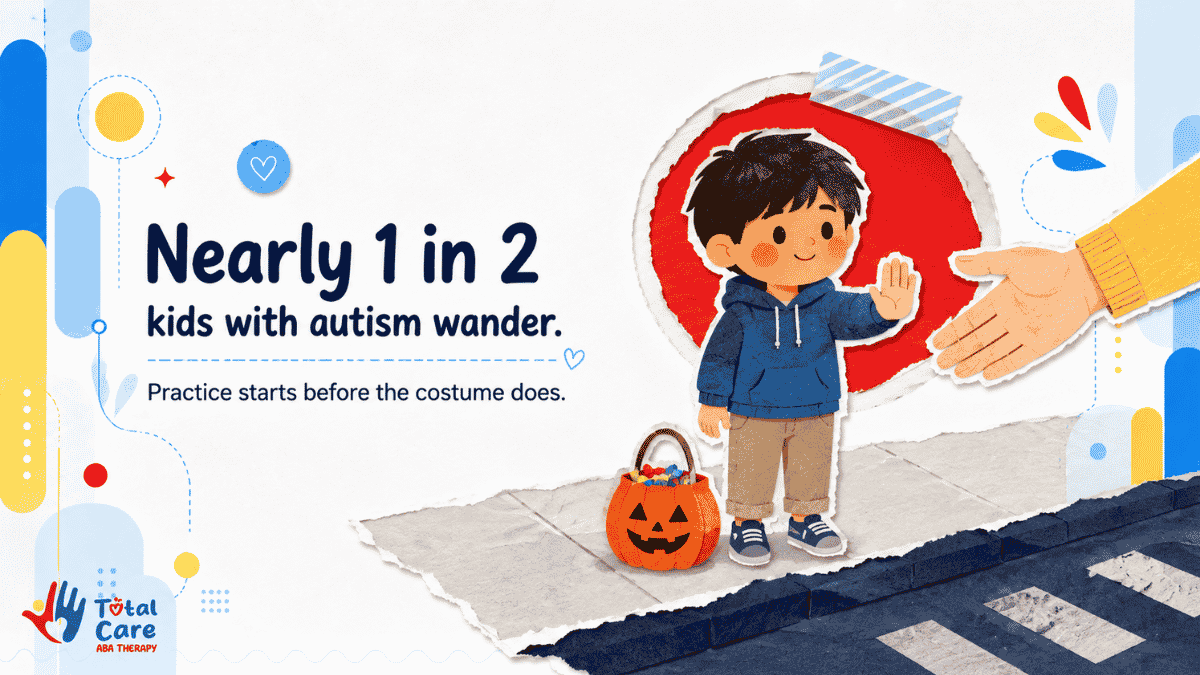
Our team individualizes every target response, so a child who feels uncomfortable with hand-holding can practice walking within arm's reach instead. According to guidance from the CDC, wandering affects nearly half of children with autism and can become an emergency very quickly.
Rehearsing proximity skills works best in environments that mirror where you plan to go. Walking from your front door to a neighbor's porch creates a simple, realistic scenario for early practice.
Halloween practice:
- Mark a short practice route along your walkway.
- Practice walking within the agreed distance together.
- Add the candy bag once the walking habit feels comfortable.
- Introduce one new costume or distraction at a time.
3. Safe street crossing requires more than looking both ways
Crossing the street safely relies on a chain of smaller, connected actions. Our team breaks the process into individual steps: approaching the curb, stopping completely, checking for traffic with support, and waiting for your signal before stepping into the street. We teach each piece individually when learning the entire sequence at once feels heavy.
Teaching safety skills to children with autism works best when the response is concrete enough to practice repeatedly.
Halloween practice:
- Walk your planned trick-or-treating route during daylight hours.
- Pause at every curb even when no cars are visible.
- Repeat the exact same short cue at every intersection.
- Practice at the specific crossing points you plan to use on October 31.
4. Caregiver permission can be safer than a simple “stranger danger” rule
Generic rules about strangers can confuse children because many adults in the community, like store clerks or neighbors, are unfamiliar yet helpful. Safety instruction focuses on what your child should do when an adult invites them to go somewhere. Our team helps children practice checking with you first, saying no, or stepping back toward a caregiver.
How ABA therapy safety skills can use a family safe word
A family safe word is one possible strategy. The child can check for the agreed word before leaving with another person. Later rehearsals can include different familiar adults so the response does not become tied to one person.
What short home practice can look like before Halloween
During parent training, we demonstrate how to turn a single therapy target into a brief home exercise. You watch our team model the response, try it yourself with direct coaching, and then repeat the exercise during standard family routines. Halloween preparation uses this same model around front doors, costume accessories, and sidewalk walks.
One parent balancing a demanding work schedule shared how home-based ABA therapy made daily routines feel manageable rather than rushed. When we adjusted practice steps to fit their evening schedule, the child responded much faster because training happened in natural moments.
- Monday: Practice the "stop" response for five minutes indoors.
- Wednesday: Rehearse proximity walking along the front sidewalk.
- Saturday: Practice walking to one neighboring house on your planned route.
You do not have to choose safety goals or teaching steps on your own. At Total Care ABA, we can identify skills that match your child's current needs and guide you through simple home practice. Reach out to our team to get started.
5. Identification skills give a child another way to get help
Personal identification skills give children a practical tool if they ever become separated from you. Some children learn to state their name and your phone number verbally. Other children learn to hand an identification card to an adult, point to contact details on a wearable tag, or use an augmentative and alternative communication (AAC) device.
Halloween practice:
- Place the identification item in the exact same pocket or holder every time.
- Ask your child to locate the item before stepping outside.
- Rehearse showing the card to a familiar adult acting as a helper.
- Practice with different trusted adults as your child becomes confident.
6. Asking the right person for help is a skill children can rehearse
Seeking help requires an active response when a child feels lost or confused. We define this response in clear steps:
- Pausing movement
- Looking for a designated helper
- Communicating that help is needed
- Presenting identification details
Pre-selecting obvious helpers, like uniforms or event staff, gives your child clear targets to look for in public.
ABA safety awareness builds real confidence when practiced across different helpers. Role-playing with trusted family members first helps children master the steps before facing real community settings.
How ABA therapy safety skills can be practiced with different helpers
- Model the exact help-seeking phrase or gesture for your child.
- Encourage your child to rehearse the response immediately.
- Provide immediate feedback and praise after each attempt.
- Repeat the exercise with another familiar adult in a different room.
- Review your child's progress with your BCBA to adjust future practice.
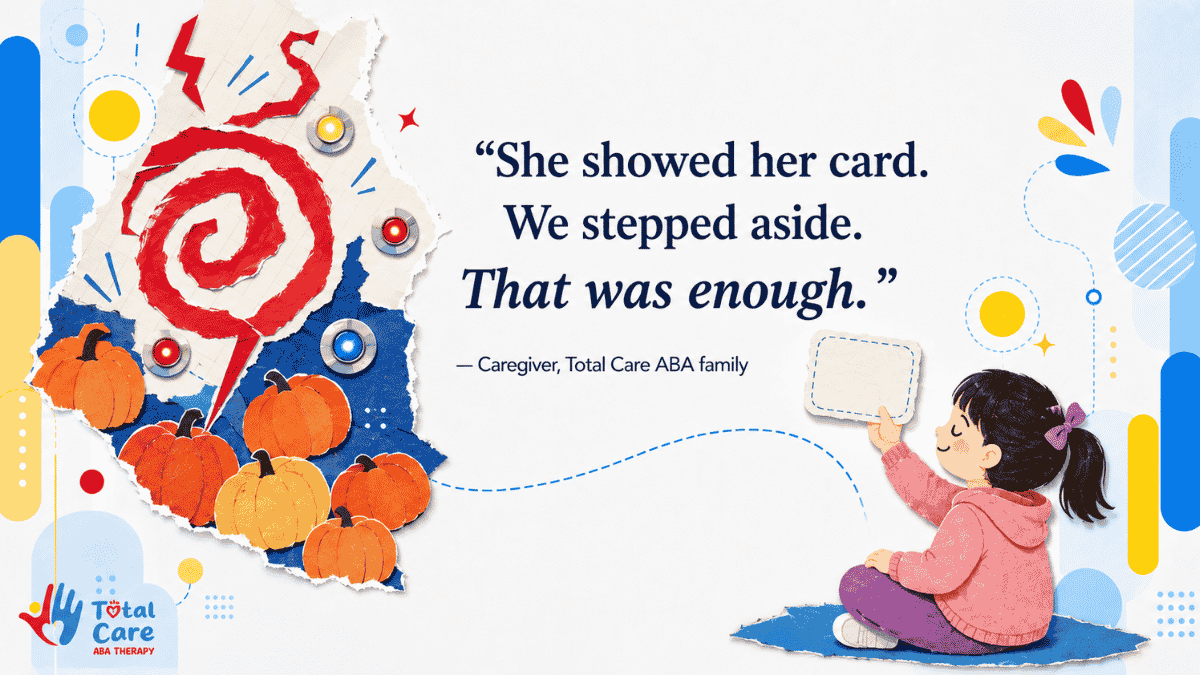
7. Requesting a break can help a child leave an overloading situation safely
Functional communication serves as a core part of any safety plan. When sensory input becomes intense, children need a clear way to express requests like "break," "all done," or "go home."
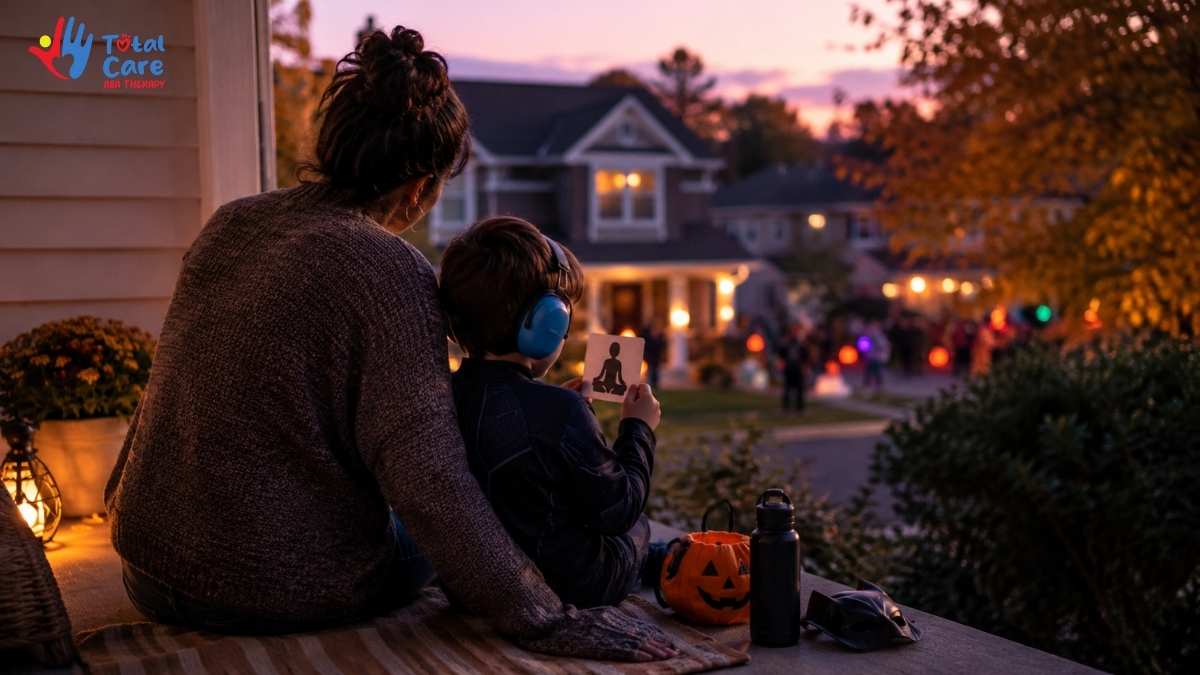
Halloween safety for children with autism includes giving your child a reliable way to step away when costumes, doorbells, or decorations feel intense. Rehearsing break signals during calm moments helps your child use them comfortably during outings.
Halloween practice:
- Choose one clear signal or card for requesting a break.
- Practice using the signal at home before heading outside.
- Decide ahead of time where you will step aside when the signal is used.
- Keep early outings short so your child experiences successful practice.
A Halloween practice plan should start small
Combining multiple safety responses into a simple weekly schedule keeps preparation manageable.
During the first week, focus on one or two basic responses inside your home. The second week introduces costume elements or candy bags during short sidewalk walks. A final rehearsal involves walking a short section of your planned neighborhood route during daylight hours.
Take note that trick-or-treating for children with autism does not require completing every single tradition to be successful. Parents sharing experiences often note that practicing at home helped establish routines. When evening crowds felt too intense, switching to a quieter daytime trunk-or-treat kept the day positive and fun.
Quick rehearsal sequence:
Home practice → front walk → one familiar door → short route → planned Halloween outing

FAQs about ABA therapy safety skills
Can my child practice a safety skill even if they do not speak?
Yes. Safety responses can use gestures, pictures, identification cards, or communication devices that fit your child's current abilities. Our team defines actions that your child can perform and that you can recognize consistently.
How early should we practice these skills before Halloween?
Practice timing depends on the specific skill and your child's current progress rather than a fixed number of days. Starting with calm home rehearsals allows skills to develop before adding costumes, crowds, or neighborhood walks.
What if my child can do the skill in therapy but not while trick-or-treating?
Performing a skill in one setting does not guarantee it happens everywhere. In our sessions, we see that practicing across realistic environments builds reliable habits. We adjust practice conditions whenever a response breaks down outside therapy.
Build safety practice into everyday routines
Safety responses become more useful when children practice them in settings similar to daily life. Halloween gives families a planned reason to rehearse a few responses before a busy outing, with practice matched to the child’s abilities.
At Total Care ABA, we provide ABA therapy, parent training, and care at home, school, and center settings across more than 10 states. When you reach out to our team, we begin with a short intake conversation followed by insurance verification and an individualized plan created for your family.