
How ABA parent training in Scottsdale, Arizona builds a weekly home practice plan
ABA parent training in Scottsdale turns goals into home practice. A weekly plan covers prompts, notes, and reviews.

How ABA parent training in Scottsdale, Arizona builds a weekly home practice plan
Key Points:
- Parent training connects your child’s therapy goals with everyday routines.
- A weekly plan identifies what to practice, what help to give, and what to record.
- Your behavior analyst reviews your observations and adjusts the next steps.
ABA parent training in Scottsdale, Arizona helps you practice your child’s therapy goals during familiar home routines. A weekly plan brings those instructions together: one useful skill, a chance to practice, and notes to discuss at your next coaching session.
At Total Care ABA, we teach caregivers through demonstrations, guided practice, and progress reviews. Here’s how those sessions can help you organize home practice around your child’s needs and your family’s week.
Connect parent training with your child’s goals
Applied behavior analysis, or ABA, teaches skills through planned support and practice. Parent training helps you understand how to use those strategies when your child needs them at home.
A Board Certified Behavior Analyst, or BCBA, is a professional with graduate-level certification in behavior analysis. Your BCBA helps select goals and explains how to practice them.
During our ABA parent coaching sessions, we demonstrate strategies, support you as you try them, and discuss what happens between visits. You can bring up a difficult routine and ask for help with a specific step.
Possible practice targets include:
- Requesting help with a toy
- Taking a turn during play
- Following a direction while getting ready
- Asking for a break during a transition
The team should explain why a goal is useful for your child. A communication goal, for example, should give them a workable way to express a need.

Choose one home goal and one routine
A weekly home practice plan becomes easier to follow when the starting point is small. One skill during a familiar activity gives you something specific to try and discuss.
Suppose your child needs help opening a toy container. Your BCBA might teach you how to support a help request using speech, a gesture, a picture, or a communication device. The method should match how your child communicates.
Your written plan can identify:
- Target: The action your child is learning
- Activity: The routine that offers practice opportunities
- Support: The cue or assistance you’ll provide
- Response: What you’ll do after your child uses the skill
- Observation: What you’ll record for the team
A prompt means help given before or during a response. Reinforcement is a response that makes a skill more likely to happen again. Your BCBA should show you how both work for the selected goal.
For families receiving our ABA services in Scottsdale, a home routine can provide a useful starting point for this conversation. The goal may involve getting dressed, playing, or preparing to leave.

Organize the week around three practice blocks
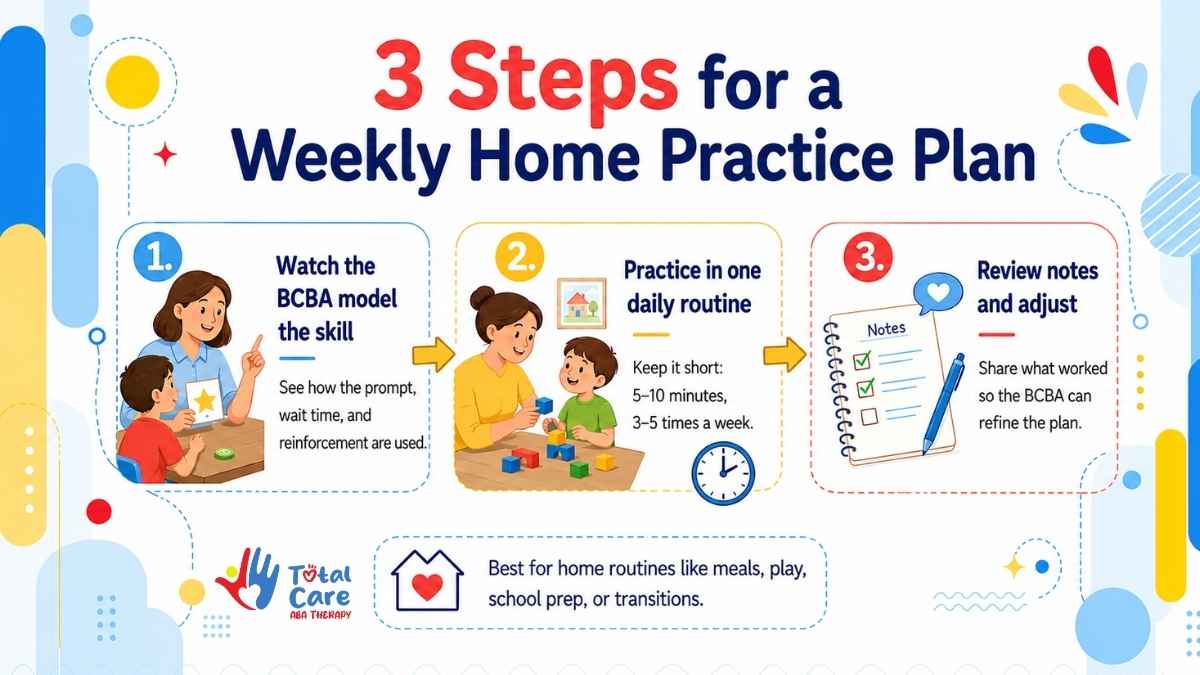
The original weekly structure works well: watch a demonstration, practice with support, and review your observations. Each block answers a different question.
Block 1: Watch your BCBA demonstrate
The demonstration shows you what to say, how much help to offer, and when to respond. Your BCBA can also explain what to do if your child responds differently than expected.
Questions are welcome here. A strategy may look straightforward during a session but feel harder during a busy evening. Your team needs to know about that difference.
Block 2: Practice during a familiar activity
Your BCBA should recommend the length and frequency of practice. A brief opportunity within play may be enough for one goal. Another skill may need a different approach.
The Centers for Disease Control and Prevention describes autism treatment across different settings, including home, school, and community environments. Home practice should connect with the support your child already receives.
A planning example might look like this:
This example organizes the week. Your child’s team decides the actual practice schedule.
Block 3: Review before adding more
Before the next session, gather your notes and questions. The BCBA may adjust the assistance, activity, or goal.
Progress can include your child needing less help or using a skill in a familiar routine. A difficult week also provides useful information. Your team can review what happened rather than asking you to repeat an approach that isn’t helping.
Discuss a routine you’d like help with
Our coaching includes everyday situations such as morning preparation and bedtime tasks. A specific example helps us understand where you need support. You can contact our team about parent coaching to discuss how training may connect with your child’s care.
Record brief notes for the next review
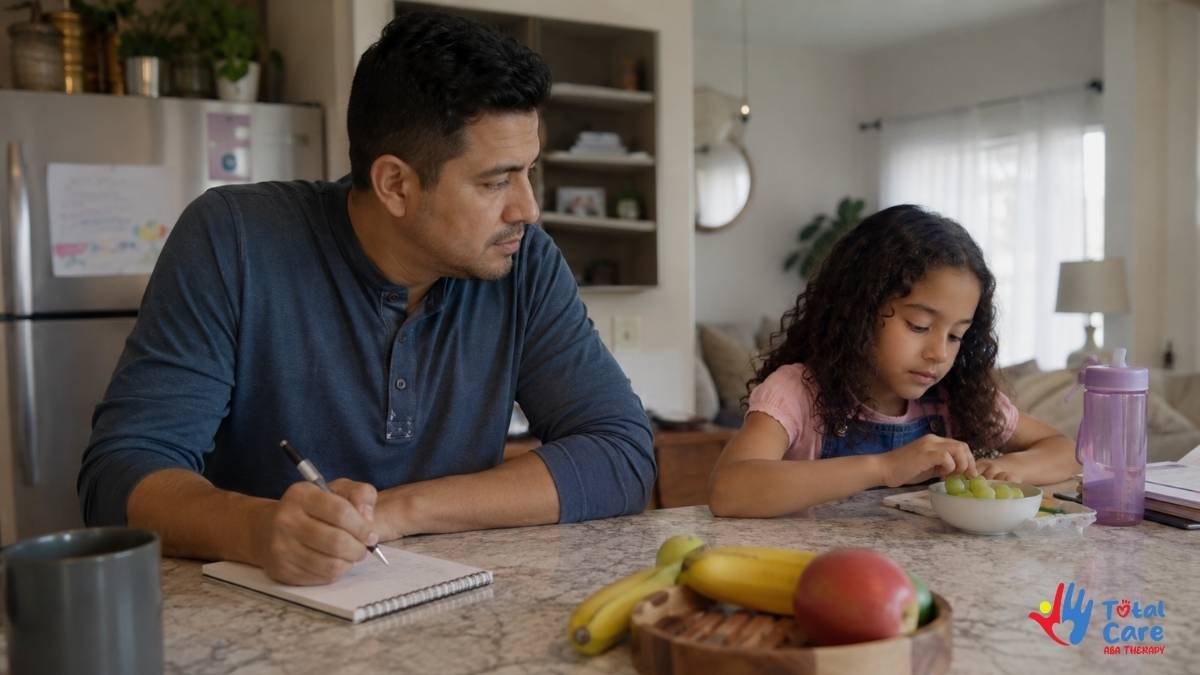
A home note should capture information your BCBA can use. Your team may request a simple checklist, a count, or another recording method.
Useful details include:
- Activity: What was happening during practice?
- Assistance: What cue or help did you give?
- Response: What did your child do?
- Follow-Up: What happened after the response?
- Difficulty: What interrupted the routine?
For example, a note might explain that your child requested help with a picture after one reminder. Another could record that practice happened after a tiring school day.
Those details help the BCBA understand the conditions around a response. A missed practice opportunity is worth mentioning too. Work schedules, illness, and family commitments can affect what’s realistic that week.
Keep home practice comfortable and supportive
Your role is to support useful skills within family life. Parent training should help you understand the plan and feel able to ask questions.
A skill used with a therapist may need more practice with another person or in another place. The team can help you plan that change gradually.
Helpful boundaries include:
- Short Opportunities: Follow the practice length agreed with your BCBA.
- One Priority: Work on the selected goal before adding another.
- Breaks: Follow the team’s guidance when your child needs to pause.
- Communication: Recognize the ways your child expresses discomfort or asks for help.
- Clinical Guidance: Discuss harder steps before introducing them.
Your child’s response helps guide the next decision. Fatigue, discomfort, or distress deserves attention. The BCBA can review whether the activity needs adjustment and whether another professional should address a concern.
Confirm coaching options and insurance details
Before starting, ask how caregiver training will connect with your child’s other sessions. The team should explain who provides coaching, where it can happen, and what participation involves.
Our free ABA insurance benefit checks review coverage, possible costs, and referral or authorization requirements. A benefit check helps explain your plan; it does not guarantee approval.
Arizona’s Medicaid program is the Arizona Health Care Cost Containment System, known as AHCCCS. Its autism resources for members provide information about treatment options and ABA services. Your health plan can answer questions about requirements that apply to your child.
FAQs about ABA parent training and home practice
How much time should home practice take?
The amount depends on the goal and your child’s needs. Your BCBA should recommend a manageable schedule and explain when to pause or adjust it.
Can parent training support school or clinic goals?
Yes. Coaching can help you practice related skills at home. The providers should coordinate relevant strategies while considering the differences between settings.
What should I share if practice isn’t working?
Your notes should describe the activity, your child’s response, and the help you offered. Questions about confusing instructions are useful too. The BCBA can review the plan with you.
Start a weekly home plan with our team
A weekly plan gives you a specific skill to practice and a way to discuss what happens at home. Demonstrations, manageable opportunities, and regular reviews help keep those steps connected to your child’s treatment.
At Total Care ABA, we help caregivers learn strategies through hands-on coaching. Our team can discuss parent training in Scottsdale, review your questions, and explain the next steps for your family.