Center-based and in-home ABA therapy: How both settings work together
Effective skill carryover happens when center-based and in-home ABA therapy work as one unified plan. See which goals fit each environment best.

Center-based and in-home ABA therapy: How both settings work together
Key Points:
- Center-based and in-home ABA therapy combine structured clinic instruction with real-world practice to help children master skills across different environments.
- Clinics offer focused learning, while home sessions target daily routines like self-care and family communication.
- This unified strategy ensures faster progress and meaningful skill carryover.
A child might master a skill in one setting but still need a little help using it somewhere else. A greeting might come easily at a clinic, but feel harder at the dinner table or during playtime with a sibling.
This is why center-based and in-home ABA therapy often work best as one connected plan. When goals are clear and the BCBA leads a single strategy, learning feels more practical for daily life.

When Center-Based and In-Home ABA Therapy Can Work Better Together
A combined plan is helpful when a child needs the structure of a clinic alongside real-life practice at home. Some children do well with table work and peer time at a center but need extra support during meals, dressing, or sibling play at home.
Because behavior can look different depending on the environment, the best setup depends on a child’s specific goals and how they respond in each space.
Clear goals come first. Research from 2025 shows that ABA-based programs have a large effect on language and a steady impact on cognitive skills. The main idea is that the setting should support the goal.
What Center-Based ABA Therapy Often Teaches Best
Clinic sessions often help when a child needs structure, fewer home distractions, and practice working with adults outside the family. A center can also give more chances to build shared attention, follow group directions, move between tasks, and wait during short routines.
For some children, clinic-based learning makes early skill teaching easier because the environment is more predictable.
Center work may fit goals like:
- Peer interaction goals
- Classroom-readiness skills
- Tolerance for transitions
- Learning to work with adults outside the family
Data from 313 participants shows that children often master new skills faster in clinic-based services, sometimes learning twice as quickly per hour as they do at home. While a clinic is not better for every child, it is a strong place to start a skill before trying it in other places.
What Home Sessions Often Teach Best
Home-based ABA can be the best place to work on the routines a child already lives through every day. That may include getting dressed, sitting for meals, brushing teeth, bedtime steps, cleaning up toys, asking for help, or moving from one part of the house to another.
Home sessions also let the team see what is happening in real time instead of trying to recreate it somewhere else.
Home work may fit goals like:
- Morning and bedtime routines
- Safety and transitions in the house
- Mealtime or self-care targets
- Family communication routines
This setting can also make caregiver coaching easier. A BCBA or therapist can model what to say, when to prompt, when to pause, and how to respond during real routines. That can be useful when a child knows a skill in session but still needs help using it with caregivers, siblings, or during busy parts of the day.
How One Team Keeps Skills Moving Across Settings
This is where a combined plan really shines. One BCBA-led plan sets the same targets for both places. For example, a child might first learn to ask for help at the center. Once they have it down, they practice that same skill at home during breakfast or playtime.
What good carryover planning looks like:
- Same goal written the same way in both settings
- Same target skill practiced with different people
- Home practice built into routines, not added as extra homework
- Quick review of what worked and what did not
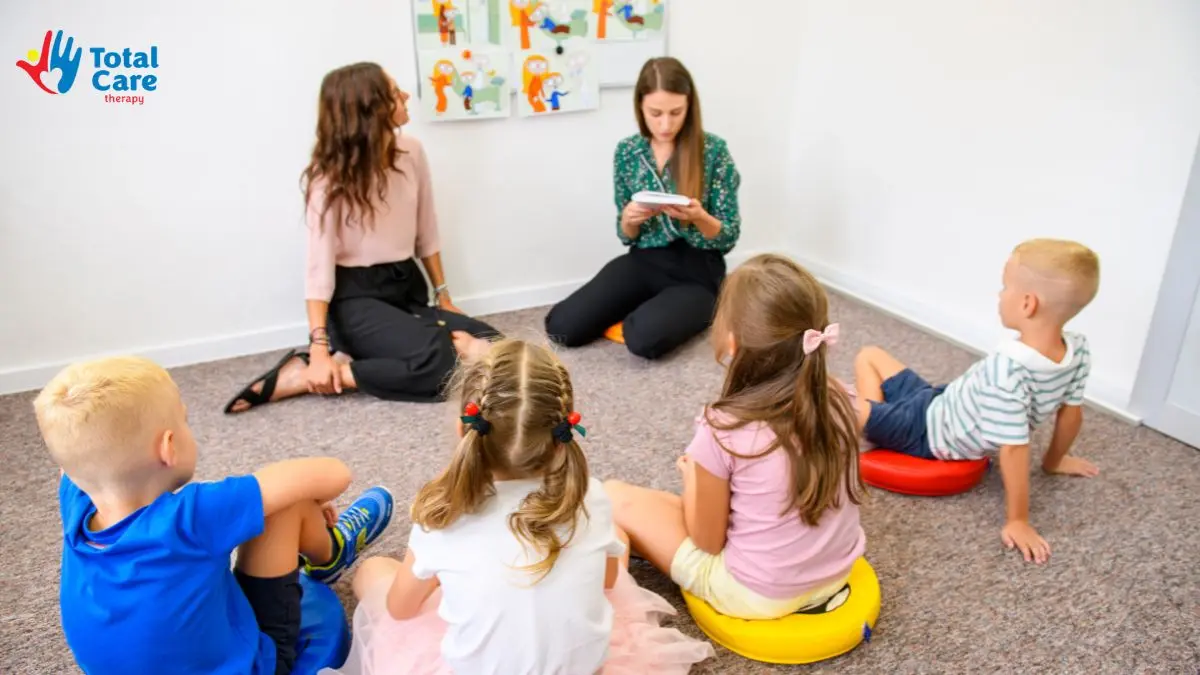
How Center-Based and In-Home ABA Therapy Supports Skill Carryover
Progress is about more than just doing a task in a therapy room. It is about using that skill everywhere. Most children need specific support to use a learned skill beyond the original teaching spot.
Caregiver coaching makes this much easier. A 2025 review found 86% of 21 high-quality experiments on caregiver-implemented interventions improved daily living skills. That is a strong reason to practice home goals during routines the child already has, such as dressing, toileting, meals, or transitions.
What Families Should Ask Before Starting A Combined Plan
A combined plan is not automatically the right fit for every child. Still, it can help to ask a few clear questions before services begin or expand. That keeps the plan focused instead of scattered.
- Are the home and clinic goals different for a reason?
- Who updates the caregiver each week?
- How will progress be tracked across both settings?
- How much practice is realistic at home?
- When should a skill start in clinic first and move home next?
- If school-based ABA is also part of care, how will everyone stay aligned?
These questions help with choosing an ABA setting and with deciding whether mixed ABA service delivery models make sense for the child’s daily life. At Total Care ABA, care is offered at home, in school, or in a clinic, which makes that kind of coordinated planning a natural fit for families who need more than one setting.

FAQs About Center-Based ABA and In-Home Therapy Comparison
What is skill generalization in ABA therapy?
Generalization is simply using a skill in new places, with new people, or during different routines. A child might learn something in a session and then start using it at school or in the community without needing extra help
How much parent involvement is needed in a combined ABA plan?
Involvement usually means learning a few clear strategies to use during the day. It does not mean you have to run the sessions. This is a proven way to support communication, social goals, and behavior at any age.
Can home and center ABA be part of one treatment plan?
Yes. Both settings can be part of one plan when they share the same goals and teaching steps. Coordinated programs built around using skills in multiple places often see the best results.
Build One Plan For Real Life
Some children may benefit from learning in both a clinic and home setting because each place can teach something different. What helps most is not picking sides, but building a plan that connects skill teaching with daily life.
At Total Care ABA, we provide ABA at home, in school, or in clinic, and we serve families at our centers across Arizona, Tennessee, Indiana, Georgia, North Carolina, Maine, Utah, New Mexico, Virginia, and Colorado.
If you want help sorting through home vs center ABA, we can talk through your child’s goals, daily routines, and support needs, then help build one connected plan that fits real life. Get in touch with us today!